ICC election 2026
An overview of the ICC election at Jadavpur University, and our call to the students.
3/3/20266 min read
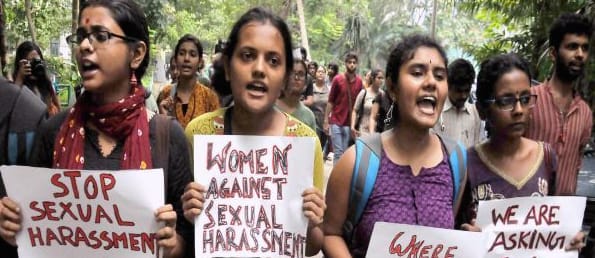
Comrades, now that the notification for ICC election and the preliminary voter list has come out, it is important for us to know about ICC, its history and current status. It is a call to all our readers to participate in ICC election as this will be the first student election Jadavpur University has had in last six years. As many students are still confused about what ICC represents and misrepresents and what it means for campus democracy in general, we must first ask-
What is ICC?
The Internal Complaints Committee (ICC) is a statutory body mandated in institutions (universities, workplaces, organizations) under the framework of the Sexual Harassment of Women at Workplace (Prevention, Prohibition and Redressal) Act, 2013. Its core function is to address and redress complaints of sexual harassment in workplace for all the stakeholders of HEIs (in this case Jadavpur University). It provides a formal, confidential platform for survivors to report harassment against any and every constituent of our university. With recent incidents we can see that lumpen regressive activities and apolitical degeneracy of campus is on the rise. So, the need for a complaint redressal system has never been more imminent. But ICC isn't a new thing in our university, as it has existed here since 2016.
History of ICC in Jadavpur University
Jadavpur University reconstituted the earlier GSCASH (Gender Sensitization Committee Against Sexual Harassment) into ICC after University Grants Commission (Prevention, Prohibition, and Redressal of Sexual Harassment of Women Employees and Students in Higher Educational Institutions) Regulations, 2015 was implemented. This made it legally binding for every university to change any GSCASH like structure into new ICC. Now from 2017 to 2020 the student representative for ICC was decided through the union election. The winning party/organization used to nominate a student as the representative for ICC also. But after the state government put a halt to union elections, student representation gradually disappeared as the earlier representatives passed out from campus.In the absence of elected accountability, the ICC became increasingly dysfunctional. Multiple complaints of victim blaming, giving casteist remarks against members and the unprofessional handling or quiet burial of cases made ICC practically defunct with no real activity. So, as harassment cases started piling up and 'Hok Union' movement at a halt the university authorities effectively sidestepped their responsibility to hold long-overdue union elections. Instead, they decided to conduct a separate election for ICC. In response to repeated instances of institutional negligence and injustice, left student organizations raised a sustained demand for a comprehensive overhaul of the mechanism of ICC. It was under this pressure that on 19th February 2025, university authority finally green signaled the Committee for Restructuring the Internal Complaints Committee and the process for ICC election was set in motion.
Structure of ICC
The composition of ICC (as mentioned in University Grants Commission (Prevention, Prohibition, and Redressal of Sexual Harassment of Women Employees and Students in Higher Educational Institutions) Regulations, 2015)consists six nominated members (three faculty members out of which one woman faculty member will be the presiding officer, two non-teaching employees and one external member belonging to non-government organizations or associations committed to the cause of women, all nominated by executive council) along with three elected student representatives (from undergraduate, master’s and research scholar level respectively) This makes ICC a nominated members dominated body, which the unions and organizations always refused. Demands were raised for a student majority body with 6 elected students from three unions (one ug and one pg) and 1 research scholars. Alongside these, other suggestions were also given, few of which are -
1) Student representatives must be recognised as full members of the committee with equal voting rights, rather than being reduced to silent observers as in the previous ICC.
2) Bringing private accommodations and public transport under the purview of ICC
3) Legal aid or advisor, medical and psychological counseling to be provided by the university or recommendation to be sent to state legal aid cell.
4) Complainants to be able to lodge a complaint till their studentship in university
5) Annual report of ICC cases to be published yearly.
6) Representation of contractual staff.
But even after year long struggle some demands still haven't been accepted. In the ICC guidelines published by the university, there will be 7 elected members in the Committee but for a certain case only 3 of them can act as representative (1 research scholar, one ug student chosen by the ug representatives and one pg student chosen by pg representatives), making it a student minority body in reality. The guidelines state a progress report to be supplied within 60 days to the respondent and the complainant but don’t mention a timeline within which a case has to be resolved and final enquiry is to be submitted after receiving a complaint. This absence of defined deadlines means there is no real assurance that the ICC will deliver timely justice to the survivor, leaving the process open to delay, dilution, or inaction. Also, the victim is required to produce a report from psychologist if they want to file a complaint after 3 months of the incident. It places an additional, unnecessary burden on the survivor, pathologizing their trauma instead of recognizing the structural and emotional barriers that often delay reporting. All of these are completely undemocratic and irresponsible guidelines pushed by authorities. This is the struggle for a restructured ICC that is going on still now which authority and organizations like SFI, NSF, TMCP etc has resisted from the beginning. Now one might ask was GSCASH the same as ICC?
Difference with GSCASH
GSCASH first evolved in campuses like Jawaharlal Nehru University in 1999, emerging from student movements and feminist struggles. It was based on Vishaka Guidelines (1997) and campus-level democratic initiatives. Taking inspiration from there, Jadavpur University also constructed its very own GSCASH.
1) It had no nominated members. Unlike ICC It had directly elected faculty, students and staff members.
2) It functioned as an autonomous campus body, not under administration or headed by institutional authority like ICC which creates a clear administrative bias.
3) It recognized harassment as structural issue linked to patriarchy, caste, class power unlike ICC which Individualizes harassment as case vs accused.
4) GSCASH actively ran workshops, awareness drives and campus campaigns to prevent harassment before it occurs.
Essentially GSCASH was replaced not because it failed but because the law imposed a bureaucratic model over a democratic one.
A Marxist Critique of ICC
The reason for this bureaucratization is a result of this fascist government's restriction on dissent, gender struggle, and democratic freedom. As Leon Trotsky said-
"The initiative and independence of the masses are replaced by the administrative will of the bureaucracy".
GSCASH was a body which was mostly answerable to students and workers where ICC is more answerable to higher authorities. It is yet another example of state snatching away the right of the oppressed to make local democratic bodies to solve their own problems, making them more dependent on the ideology propagated by the ruling class. The bourgeois state actively hides the deeper structural inequalities existing within a capitalist society. The effect of a patriarchal society, existence of class and caste hierarchies which the GSCASH accepted has been suppressed, discarded under the veil of legalization. ICC is but a blatant attempt in making the higher education institutes more apolitical disregarding the influence the deeper structural divides of this society have on individual cases. Not just this but there are many discrepancies with the election process itself. Our survey shows almost more than 1000 students just in faculty of technology is not present in the voter list. Entire sections, entire batches across departments have been excluded. Yet, instead of correcting this serious administrative lapse, the authorities have shifted the burden onto students themselves, forcing them to run from office to office just to secure their basic democratic right to vote.
Given these glaring procedural flaws and our fundamental ideological differences with the ICC’s structure, the question before us is not simply whether to participate, but how a progressive student can engage with this process without legitimizing its undemocratic and exclusionary nature. As Lenin has argued in his “Left-Wing” Communism: An Infantile Disorder: our task is not to abstain from flawed institutions, but to engage with them critically and use every available space to organize, expose structural injustice, and struggle to expand democratic rights. Boycotting is only an option if there is a mass upsurge against the ICC, without which boycotting the election will only hand over this space completely to the reactionary forces. Our goal will be to highlight the limitations of an administrative body like this to students while fighting tooth and nail to keep this from the grasps of undemocratic organizations so that we can transform this committee from within into a more student friendly body which is not oblivious to the class and caste exploitation that this capitalist society offers. Through our participation we must carry forward the legacy of GSCASH of a democratic, autonomous, student-led mechanism against sexual harassment.
So, we call upon all students:
Participate in the election
Vote for democratic, accountable representation
Organize to expose and change the undemocratic structure
Because every small democratic space must be defended and expanded.
INQUILAB ZINDABAD
Google drive link with relevant documents regarding ICC - https://drive.google.com/drive/folders/1Siwc-u-9yhg8Vn-Dx4VrTXtOvRfr_fUm
FIND US ON
SUBMIT your ARTICLES
Subscribe
Connect with us